- Home
- My services
- My home
- My community
- About Us
- News
- Contact us
- Accessibility information
 01475 788887
Legionella
River Clyde Homes, as your Landlord, has an obligation to ensure you are aware of the possible causes and symptoms of Legionnaires’ disease so you can identify any problems easily and report any concerns to us.
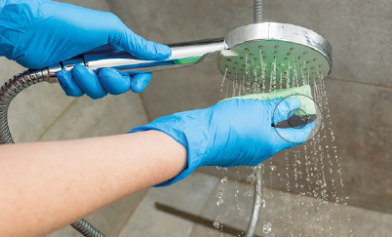
If your home has been empty for a long time, there is a chance that the quality of your water may be affected by the growth of bacteria, which occurs naturally from time to time in the mains water supply. Situations where this could happen include:
- If you have been away on holiday
- If you have been in hospital
- If there are water outlets such as showers, taps or hose pipes that are not used regular
In sheltered housing complexes and high-rise blocks, River Clyde Homes ensures that the communal facilities, empty properties, and guest rooms are flushed weekly by our Wardens and caretakers.
River Clyde Homes also arranges for monthly inspection and maintenance of the water systems through our approved water quality engineer.
What is Legionella and Legionnaires Disease?
Legionella is a naturally occurring bacteria present in water. Although the risk is very low, there is a chance that Legionella bacteria can develop in stagnant or stored water in your home. Legionnaires’ disease is a potentially fatal form of pneumonia, and everyone is susceptible to infection. It is caused by the inhalation of very fine droplets of water from contaminated sources containing legionella bacteria.
Where is Legionella found?
All hot and cold-water systems in residential properties are a potential source of legionella bacteria growth. It is usually caught in places like hotels, hospitals, or offices where the bacteria have got into the water supply. It is very rare to catch it at home.
The main areas of risk are where the bacteria can multiply and increase to dangerous levels and then spread, e.g. in spray from showers and taps.
Conditions perfect for bacterial growth is where water of between 20°C and 45°C stagnates, and where there is sludge, rust, and scale present for the bacteria to feed upon and multiply.
Action you can take
There is no need for concern. Legionnaires’ disease is easily preventable by putting in place some simple control measures:
- Run water through showers and taps for 10 minutes following a period of non-use (i.e. after you have been on holiday or if a room is not in regular use).
- When running the shower after a period of inactivity, try not to create any spray, by putting the shower head in a plastic bag.
- Keep all shower heads and taps clean and free from build-up of lime scale, mould, or algae growth.
- Flush toilets with the lid down following a period of non-use.
- Drain hosepipes after use and keep out of direct sunlight.
- Flush through for a couple of minutes before filling paddling pools etc.
- Keep spas and Hot Tub’s clean and free from dirt and debris and check and clean filters – change the water before use if it is not used often.
- Keep stored hot water in your system at a temperature of 60°C or greater (immersion heaters).
- Report any deposits such as rust or any dirt flowing from your water outlets.
If you have any concerns regarding the quality of the water supply in your home, or for advice on how best to flush your taps and showers please get in touch with us immediately.
